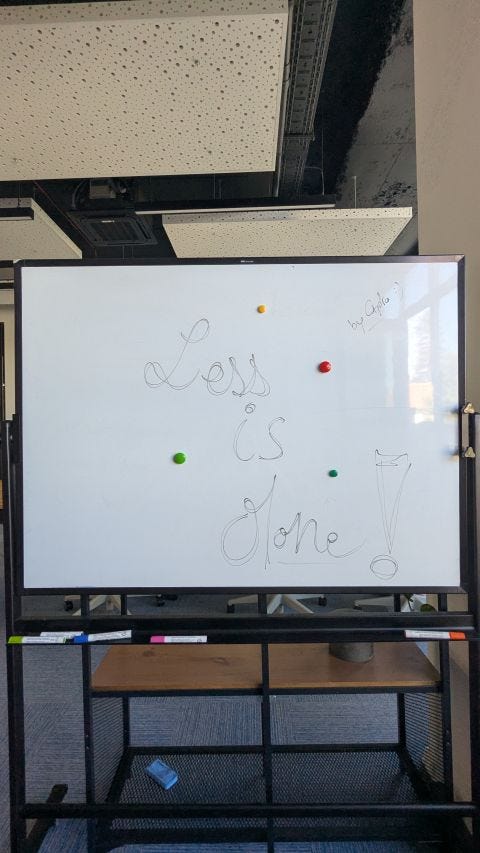
A good AI Agent has less AI than a bad one

Book a demo
See what an AI agent could do for your finance team.
30-minute call with a finance automation expert.
Book a demoNo commitment · Clutch-verified reviews
Say that three times fast... it's basically a tongue twister.
Let me explain:
A few weeks ago, a CIO looked at me like I was running a scam. I'd just told him his team didn't need AI for a task: it was a logical process, no decisions to make, nothing to invent.
So here's the clarification:
An AI Agent is built from three components:
🔌 Connectors: what it can access and use
🧠 Skills: what it knows how to do
💾 Memory: what it remembers and can draw on
AI's real job sits on top of those three: understanding what needs to happen, whether it knows how, where to find the information, and what from the past is worth pulling in.
Which brings me to my point 🥁
Right now, a lot of AI providers put AI everywhere. Less engineering, less tuning
BUT more mistakes, and users who walk away thinking the agent is dumb.
A genuinely impactful agent looks different:
✅ Skills that are well-trained and specific
✅ Memory that's rich enough to actually leverage
✅ Only the connectors it truly needs (extra ones just add confusion)
Breaking it down further:
🔌 Connectors: A well-built integration, solid API or clean RPA, will always outperform an improvised one.
🧠 Skills: No AI is often the smartest choice. It avoids guesswork and approximate answers.
💾 Memory: No AI here either. Just real historical data = your best guardrail against hallucination.
So if you're building an AI Agent, or evaluating one to buy:
more AI isn't the goal.
Smarter AI is. That's what every expert in this space is trying to get people to understand right now.
Welcome to my self-promoted technical week, I missed doing these.
Credits to Tsonyo Atanasov for the inspiration.
Have a great week,
Alexis
—
Originally posted on LinkedIn:
https://lnkd.in/p/dVJPvN2F
Also published in the Capto newsletter on Substack